A weaver at a back-strap loom with a part-finished panel
The loom
Back-strap, tensioned by the weaver's own body, patterns held in memory.
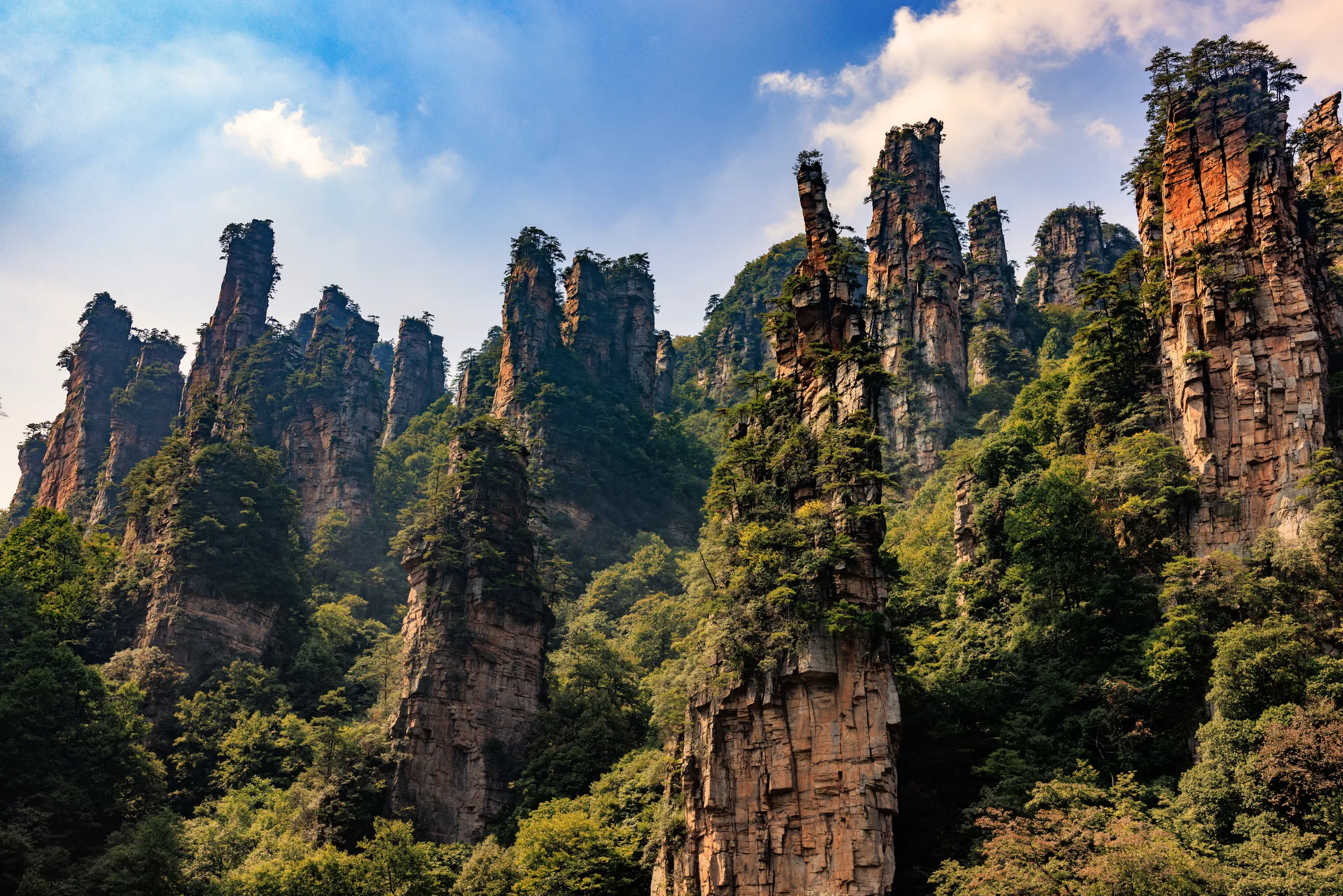
Everyone photographs the towers. Almost nobody spends a day with the people who have lived below them for several centuries, which is odd, because that is the half of Zhangjiajie you cannot see from a viewing platform.
Back-strap, tensioned by the weaver's own body, patterns held in memory.
Cured pork, chilli, and smoke as a seasoning rather than an accident.
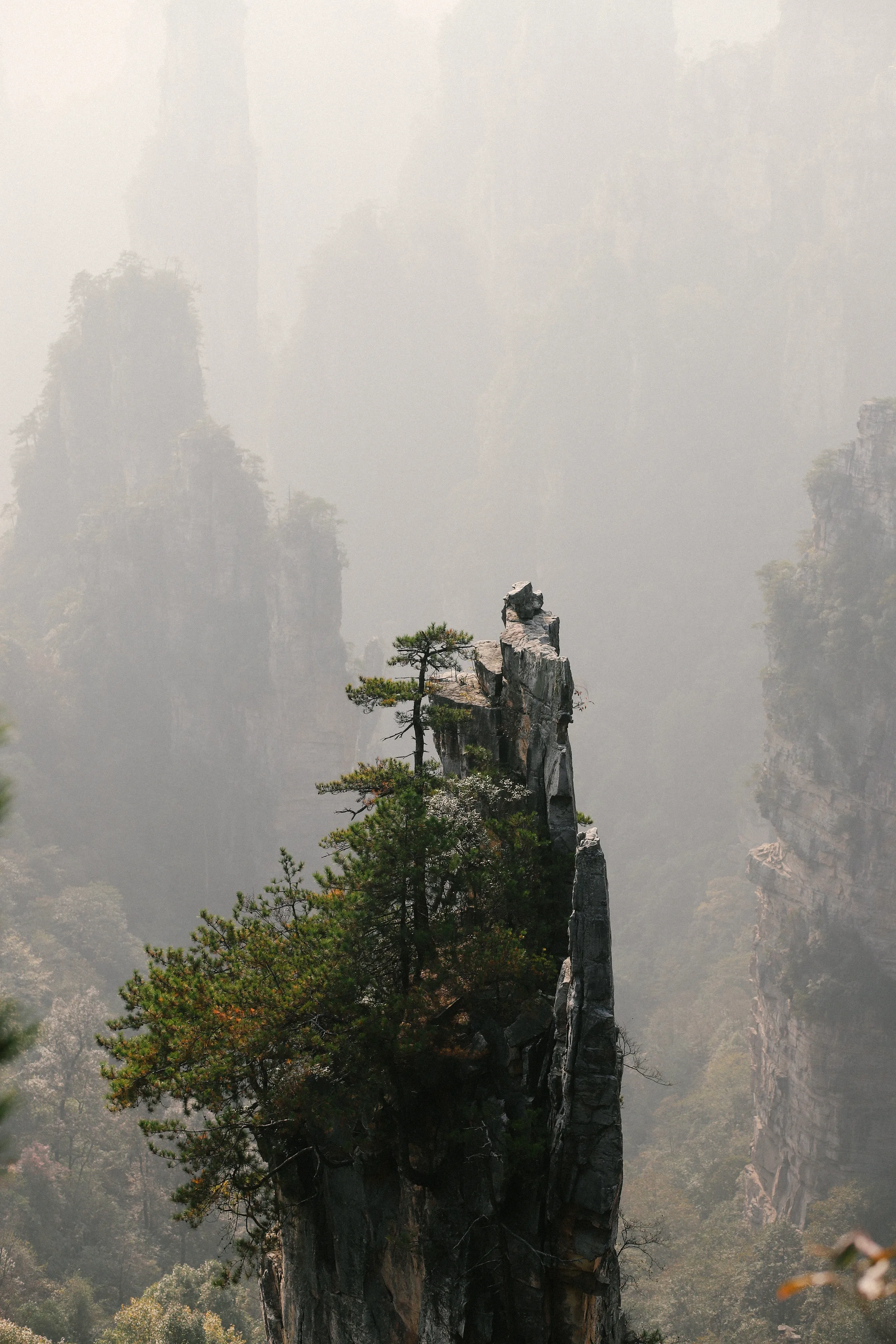
Seen from below and from a distance, once the coaches have gone.
Tujia brocade is woven on a back-strap loom — one end tied to a post, the other around the weaver’s waist, so the tension is her own body leaning back. It is slow, it cannot be scaled, and the patterns exist only in the weavers’ memories. Nothing is written down.
The cooking follows the same logic. Cured pork hung in the smoke of the hearth all winter, chilli that arrived four hundred years ago and was absorbed completely, and a preference for sour that outsiders take a day to adjust to.
The songs are the part that stays with people. They belong to specific occasions — work, weddings, funerals — and they are not sweet.
One of China's larger recognised minority peoples, long settled across western Hunan. Their timber building, brocade weaving and funeral song traditions are distinct from Han practice and are still in daily use.
No. You are in a working house with a weaver who sells her work. The singing happens because we ask, not because a schedule says so.
Yes, directly from the weaver. We will tell you what is a fair price and then stay out of it.
We can, late in the day when it thins out, but this day is built around the valley people rather than the viewing platforms. Tell us which you want to weight.
Only if you want them. The day is normally private to your party; we also run it as a small group when travellers ask to share, and we will tell you which applies to your dates.