A needle drawing coloured thread through dark cloth
The stitches
A dozen distinct techniques, some of which exist nowhere else.
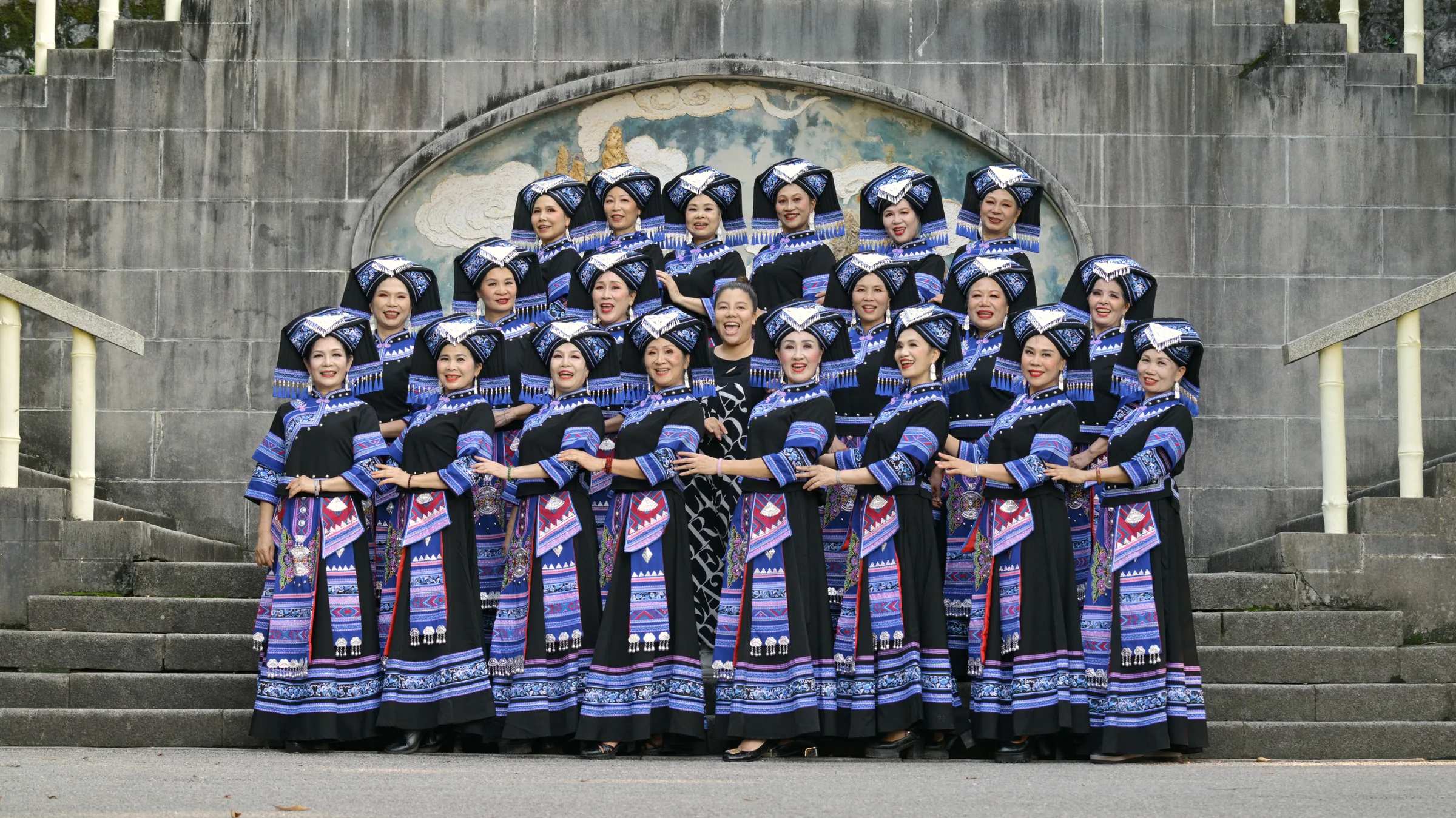
The Miao have no written script. A great deal of what other peoples put into documents went instead into cloth, which means the panel in front of you is closer to a text than a decoration.
A dozen distinct techniques, some of which exist nowhere else.
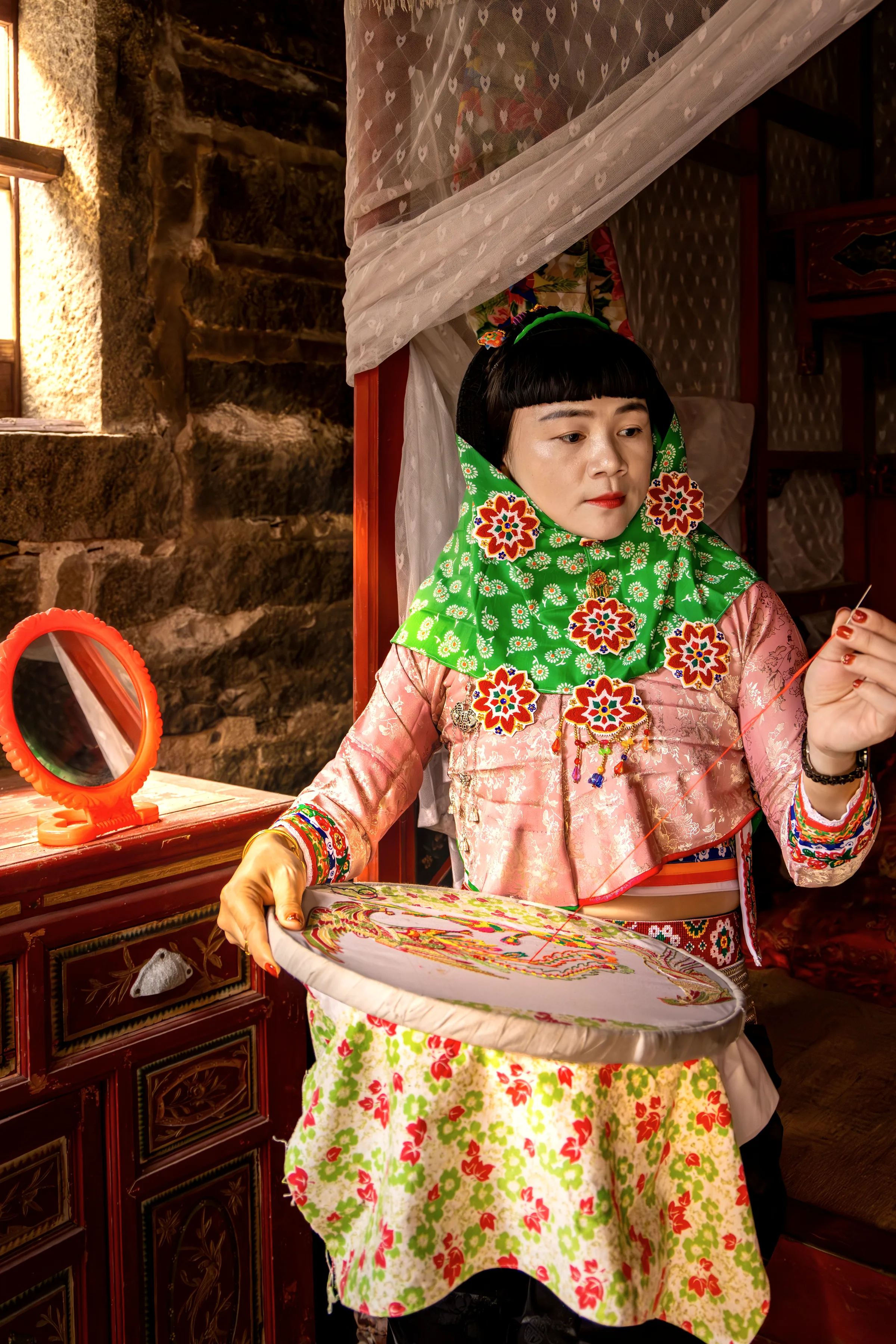
Migration routes, rivers, ancestors. Read, not admired.
Started properly, finished at home, badly, over a long winter.
Without a script, the cloth does the work. Motifs that look ornamental to a visitor are held within families to record specific things — which river was crossed, which route was taken, who descends from whom — and the readings differ from valley to valley.
That makes the older panels difficult to price and impossible to replace. A piece worked by a grandmother is not craft stock, and plenty of households will not sell one under any circumstances.
You will be taught two or three stitches and get perhaps a few centimetres done. This is not a failure of the day. It is the correct measure of how long the real thing takes.
Yes. Particular motifs are held to record migration routes, river crossings and lineage. Interpretations vary between valleys, and your host will tell you what her own family's version says.
No. You will be taught two or three stitches slowly and will get a small area done. Nobody finishes a panel in a day.
Sometimes. Genuinely old family work is often not for sale at any price, and we will not pressure a host to part with it. Newer work usually is.
From about ten, yes, though attention tends to run out after an hour. We build in a break.
Only if you want them. The day is normally private to your party; we also run it as a small group when travellers ask to share, and we will tell you which applies to your dates.