Half past seven
The tea house is already full. Mostly of people over seventy.
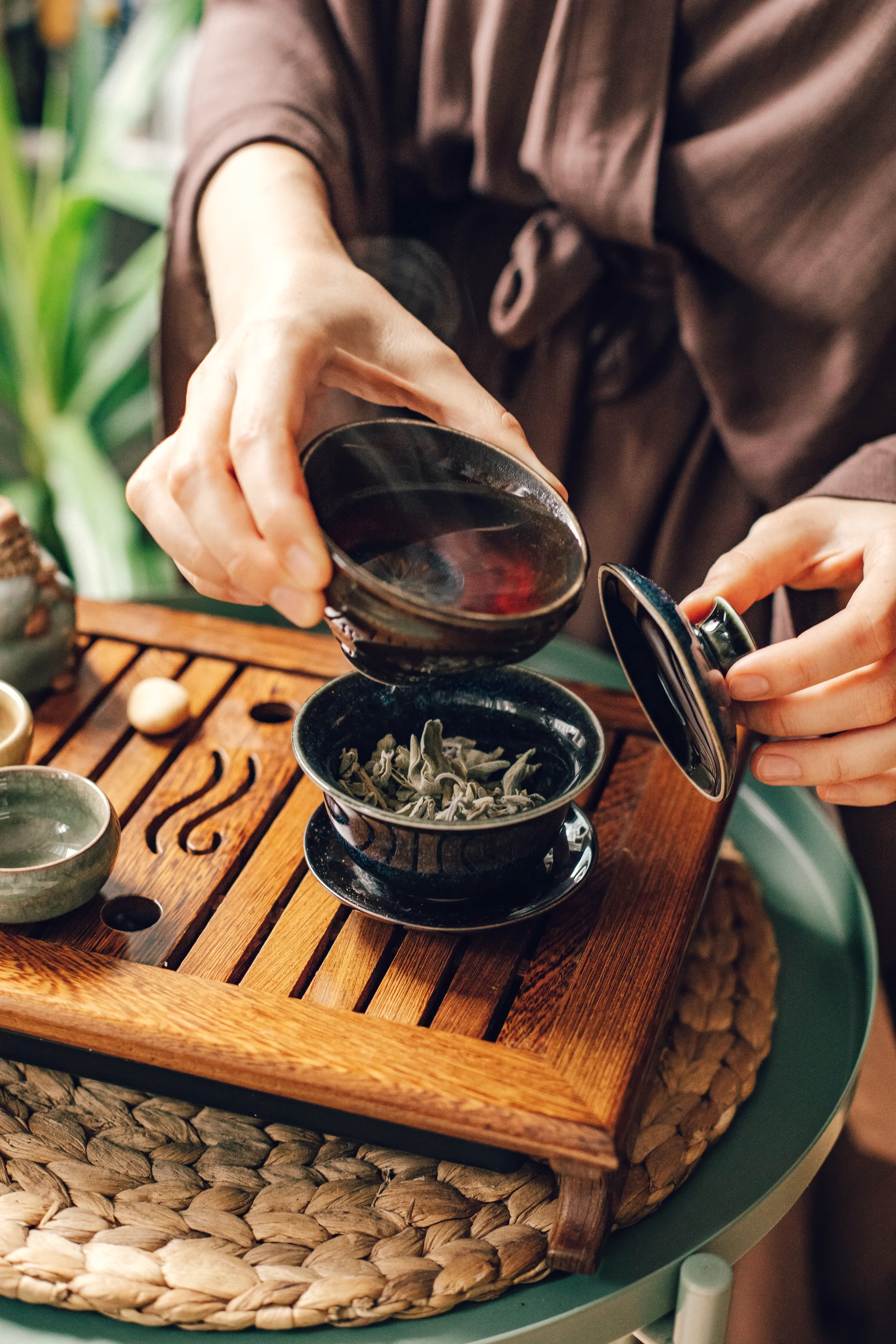
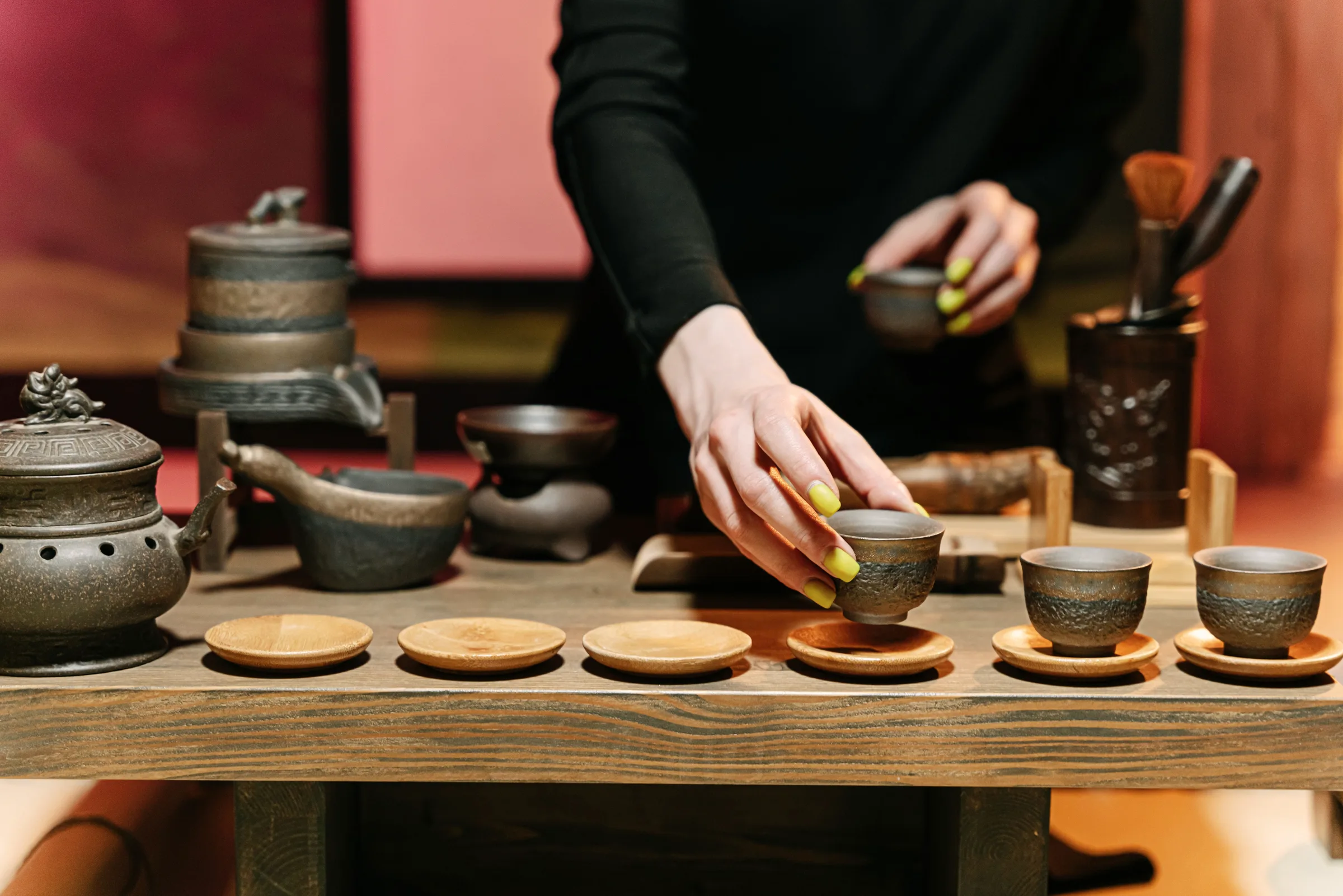
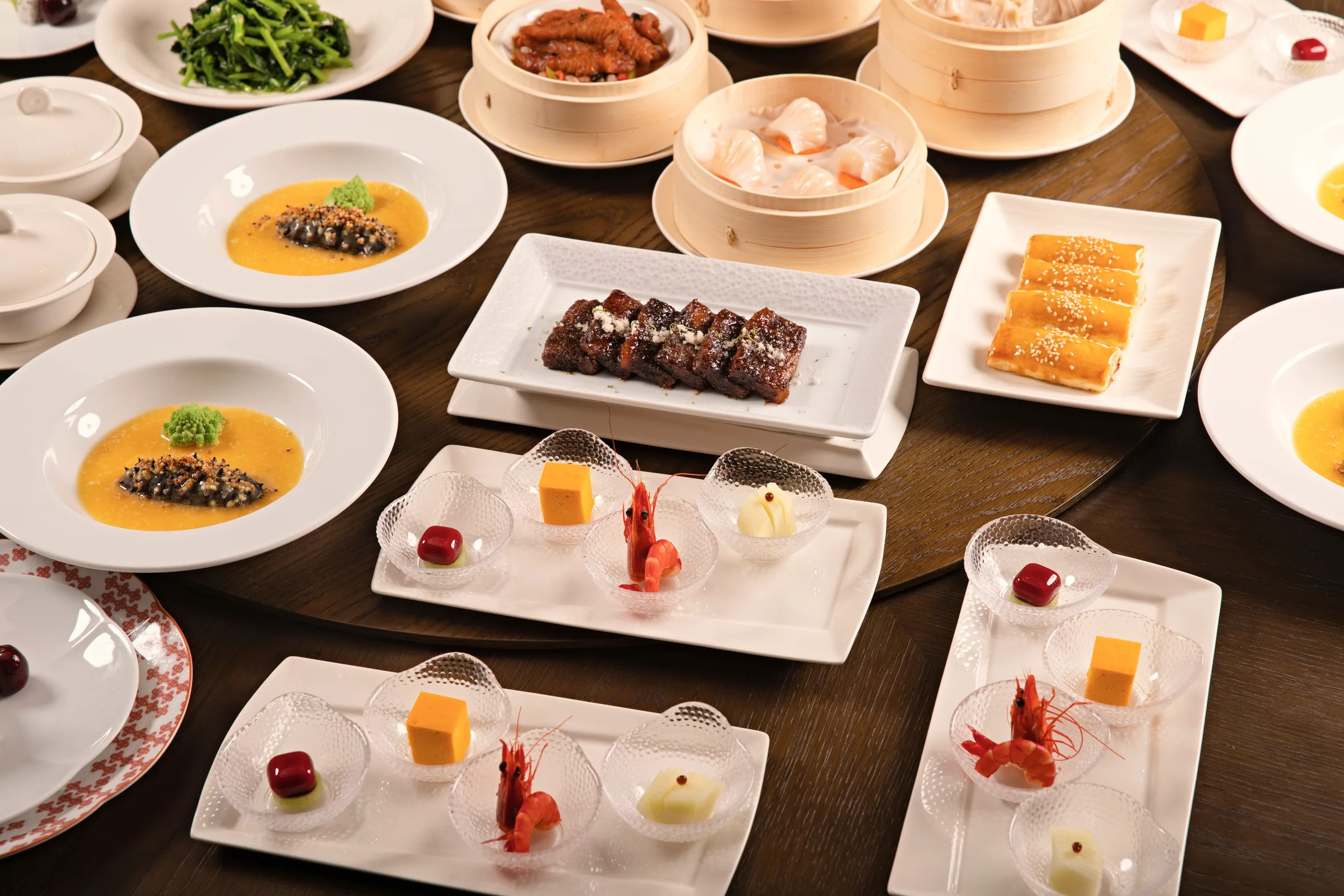
Yum cha is not brunch. It starts before seven, it is a social obligation as much as a meal, and the tea is the fixed point the food happens around.
The tea house is already full. Mostly of people over seventy.
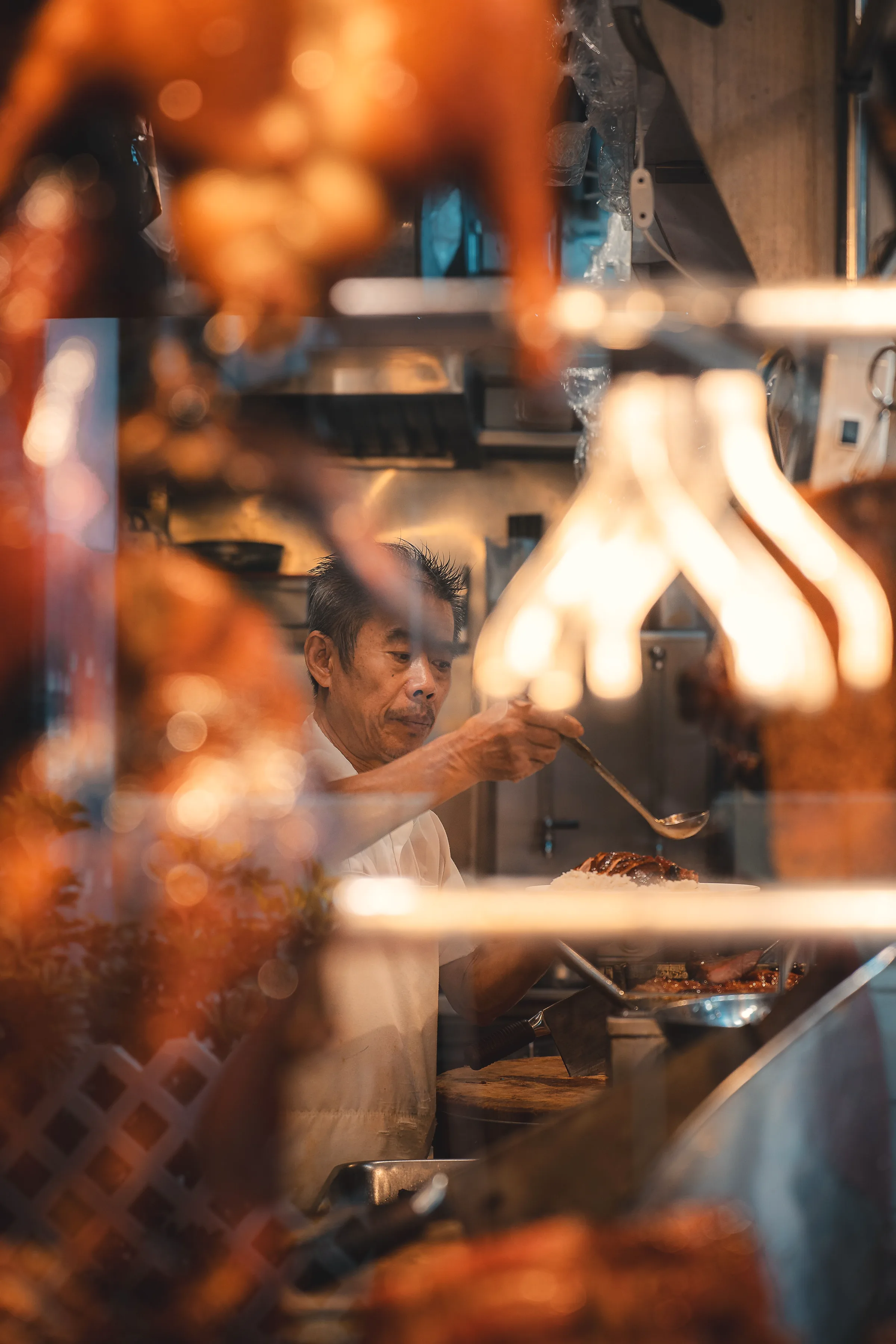
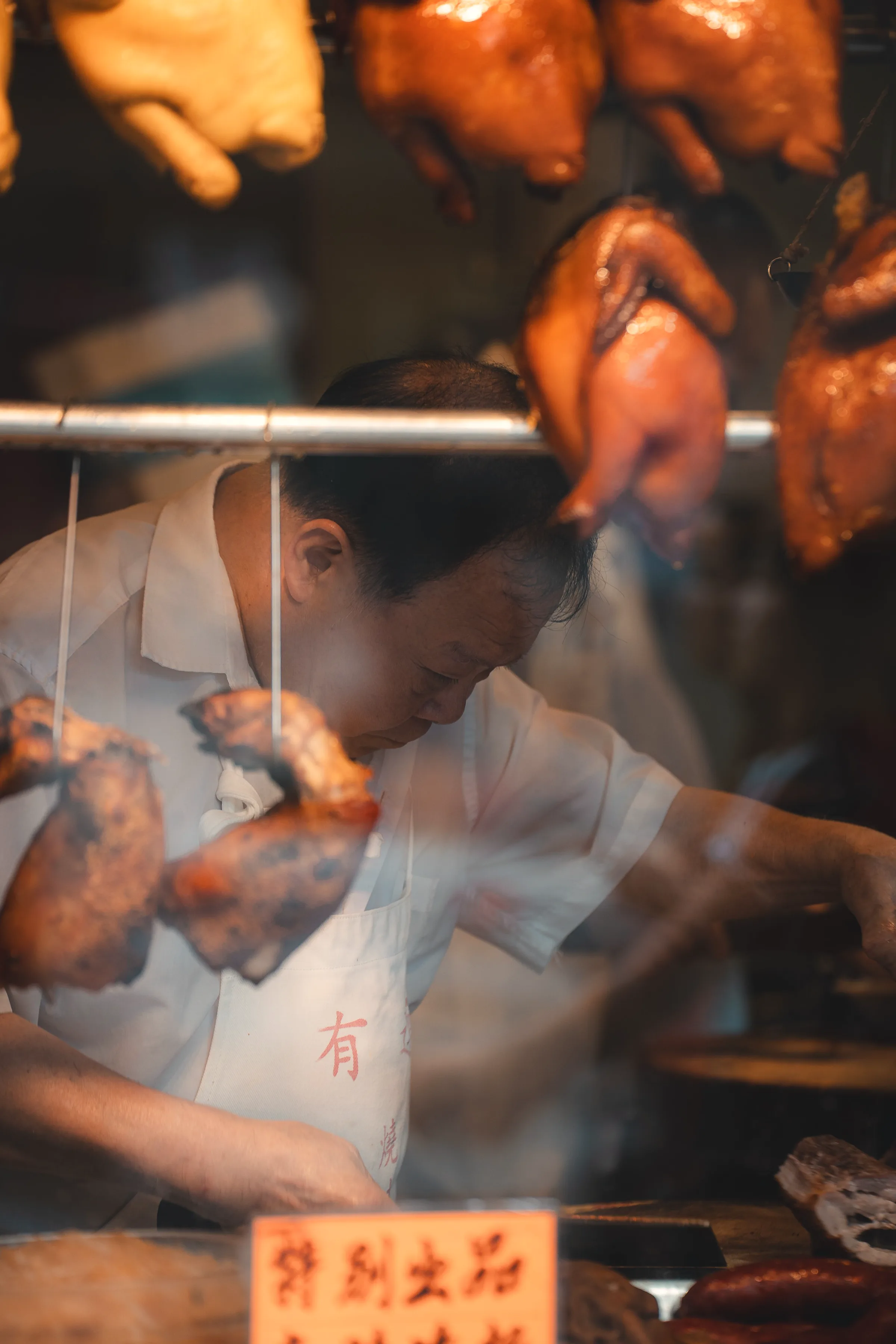
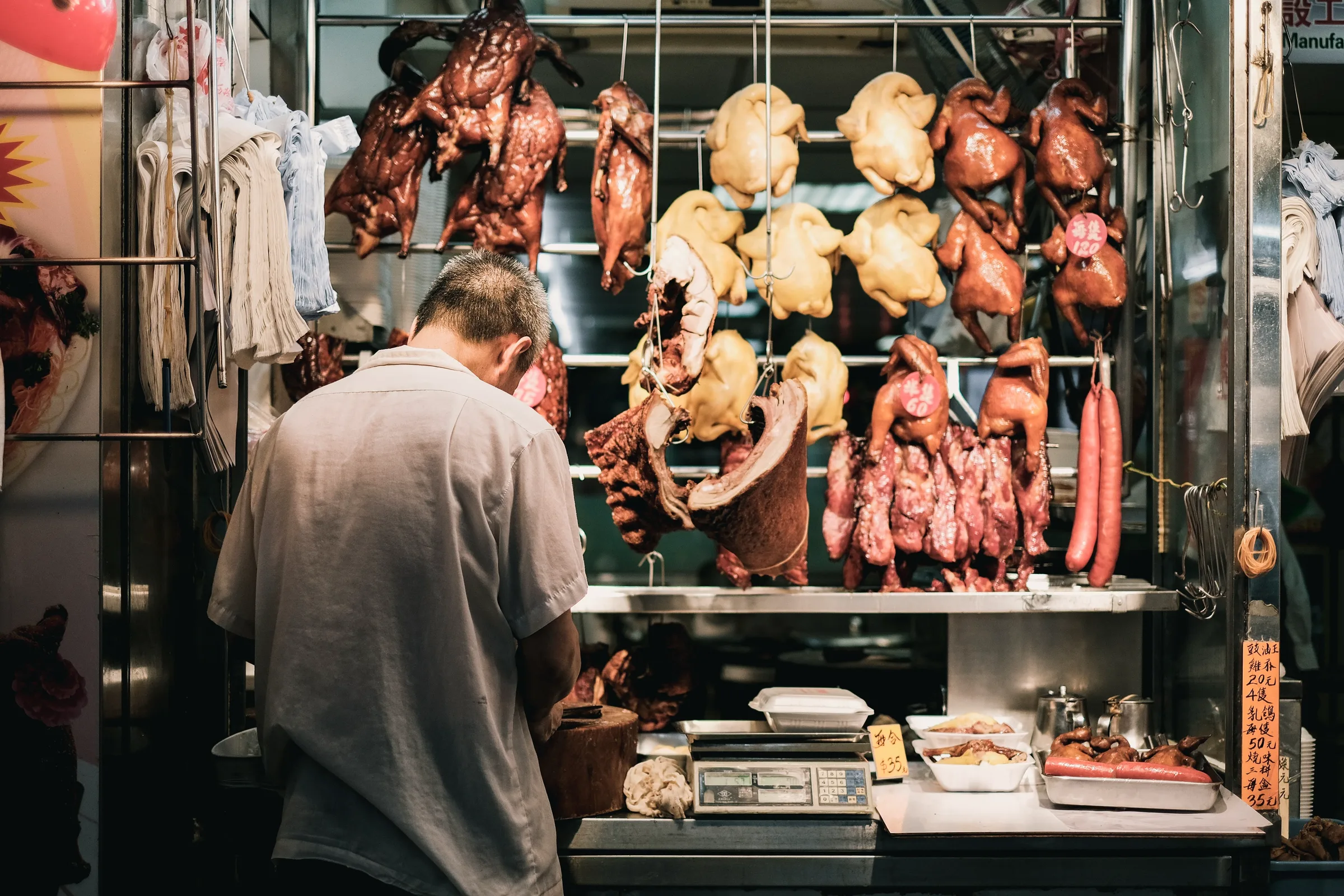
Lacquered duck and pork hanging in the heat, and a chef with a cleaver.
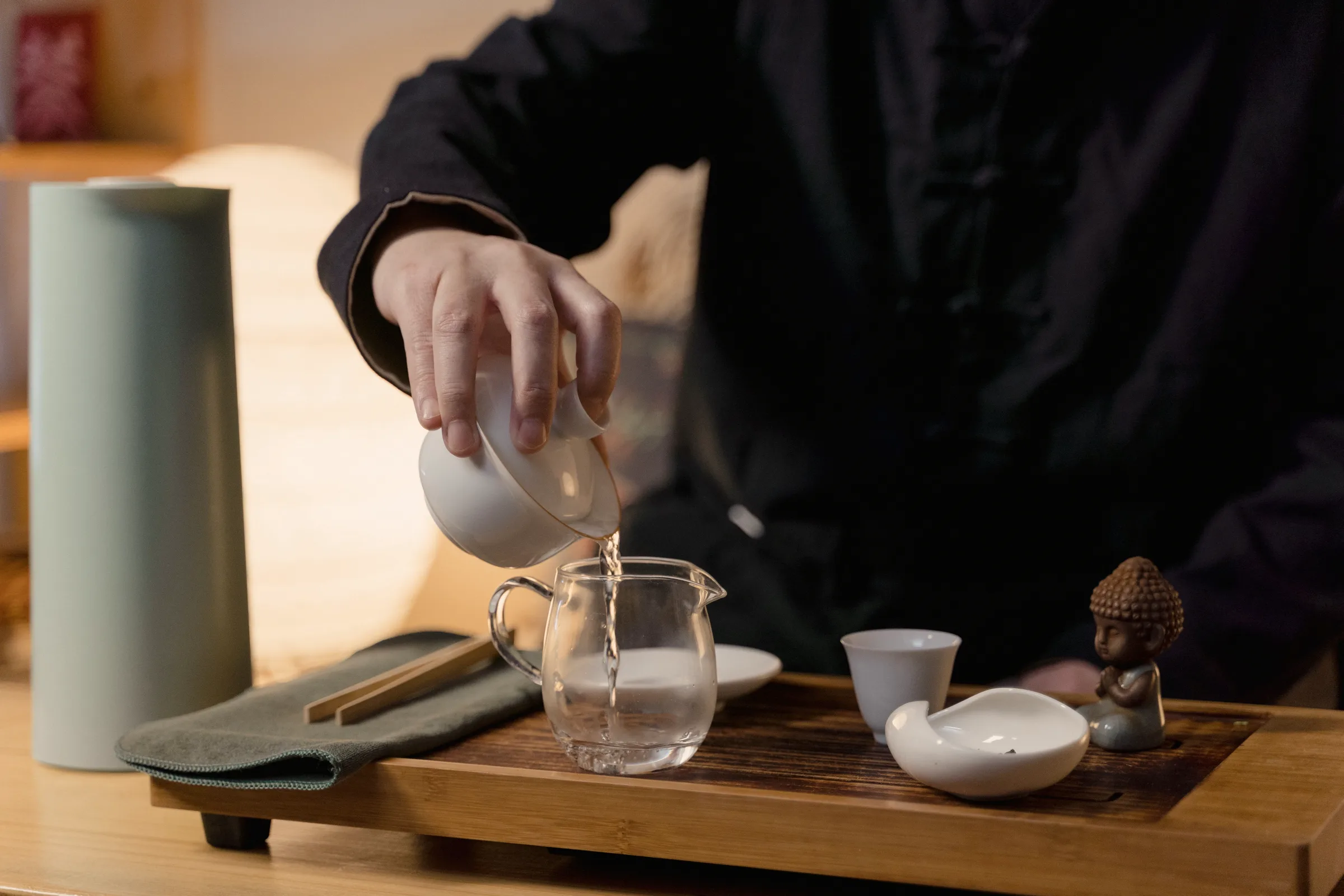
The height is not showmanship. It aerates and it cools.
The tea house at half past seven is full of people who have been coming to the same table for forty years. That is the thing worth arriving early for — not the food, which is available all morning, but the room while it still belongs to its regulars.
The etiquette is dense and worth learning: how you signal for hot water, how you thank a pour without speaking, who pours first and why the pot lid ends up propped open.
The afternoon is the trade side. Roast meat in this city is a specialist profession with its own equipment and its own arguments, and standing beside the window while someone works a cleaver through a duck teaches more in twenty minutes than a recipe would in a week.
It thanks whoever poured your tea without interrupting the conversation. There is a story about an emperor travelling incognito attached to it, which may or may not be true and is always told.
Half past seven, and it is worth it. By nine the tea house is a different and duller place.
The afternoon is built around it. Tell us at enquiry if that does not work and we will swap in the dim sum kitchen instead.
Yes — one day eating, one day cooking. Two days in Guangzhou is a proper visit rather than a stopover.
Only if you want them. The day is normally private to your party; we also run it as a small group when travellers ask to share, and we will tell you which applies to your dates.